
What a Reverse Osmosis System Removes From Las Vegas Tap Water
About 90% of Southern Nevada’s drinking water comes from Lake Mead, and the Las Vegas Valley Water District says it meets or surpasses all federal Safe Drinking Water Act standards. So a reverse osmosis system isn’t about making unsafe water safe. It’s about better taste, fewer dissolved minerals, and an extra layer of reduction at the faucet you actually drink from.
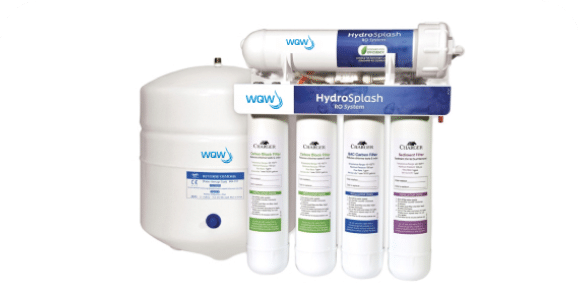
An RO system pushes water through a very fine membrane that holds back most dissolved solids. The Water Quality Association notes that RO can remove most organics, metals and nitrate. Depending on the model and its certifications, an RO system can reduce:
- Total dissolved solids (TDS), including much of the calcium and magnesium that make our water so hard (LVVWD cites roughly 16 to 17 grains per gallon).
- Chlorine taste and odor, which the carbon stages handle. LVVWD says chlorine is the most common source of taste complaints.
- Sodium, fluoride, nitrate and lead, which UMass Extension lists among the contaminants RO is effective against.
- Perchlorate, which LVVWD says RO units generally reduce to below detection limits.
Performance varies by unit, so we look for systems certified to NSF/ANSI 58, the standard for point-of-use RO. Under NSF/ANSI 58, TDS reduction is the required claim. Reductions for things like lead, arsenic, fluoride or nitrate are optional claims, and each one has to be tested separately, so check the certification listing for the specific contaminant you care about. One more note: RO on its own isn’t recommended for treating bacteria. For the science behind the membrane, read our explainer, What Is Reverse Osmosis?