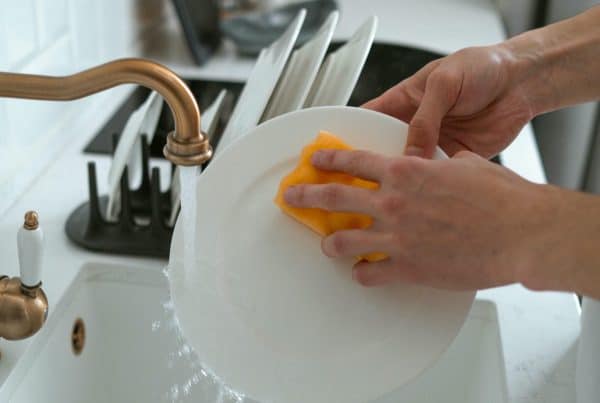


Fill a glass from the kitchen tap in Las Vegas and there is a good chance you will notice it: a faint swimming-pool taste or smell. You are not imagining it, and you are not alone. Chlorine is the single most common taste complaint the local water district hears.
That chlorine is there on purpose, and it does an important job. But you do not have to drink it. Here is why it is in the water, why the taste varies, and the simplest ways to get rid of it, from a free trick with a pitcher to whole-home filtration.
Why chlorine is in Las Vegas water
About 90% of Southern Nevada’s water comes from Lake Mead. According to the Las Vegas Valley Water District, lake water is treated at the Southern Nevada Water Authority’s Alfred Merritt Smith and River Mountains water treatment facilities. The treatment process works roughly like this:
- Ozonation: ozone gas disinfects the water and destroys bacteria and other microorganisms.
- Aeration to reduce odors and add oxygen.
- Flocculation and filtration through layers of anthracite coal, silica sand and garnet sand.
- Chlorination as the water leaves the facility.
Ozone is powerful, but it does not stay in the water. Chlorine does. That leftover “residual” protects water as it travels through the pipe network to your home. Groundwater, which makes up the rest of the supply, is naturally filtered and is chlorinated as it enters the distribution system.
The CDC explains that utilities add disinfectant to kill germs that can come from the source or enter through pipes, and that chlorine levels up to 4 mg/L (4 ppm) are considered safe. LVVWD’s 2026 Water Quality Summary lists an average free chlorine residual of 0.99 ppm, well under the 4.0 ppm maximum.
Why the taste is stronger some days
Many Las Vegas residents notice the chlorine more at certain times or in certain parts of the house. A few common reasons:
- Distance from treatment: chlorine levels naturally vary across a large distribution system.
- Temperature: warm water releases aromas more easily, so a hot shower or a glass of lukewarm water can smell stronger.
- Sensitivity: some people are simply more sensitive to the taste. LVVWD’s own taste panels found chlorine is the dominant aroma in the water.
- Hard water minerals: Las Vegas water is very hard and fairly high in dissolved minerals, which can add their own flavor on top of the chlorine.
One more note: chlorine smells like a pool. If your water smells like rotten eggs or sewage instead, that is a different problem. LVVWD points out that a sewer smell usually comes from a drain, and a rotten-egg smell in hot water often comes from the water heater.
Free and cheap fixes you can try today
LVVWD itself suggests a couple of easy options:
- Refrigerate a pitcher. Keep a pitcher of tap water in the fridge. Chlorine dissipates over time, and cold water tastes cleaner.
- Add citrus. A slice of lemon or orange helps mask the taste.
- Use a carbon pitcher or faucet filter. Activated carbon carafes can improve chlorine taste and odor. Change the filter on schedule.
These work fine for a glass of water. They do not help in the shower, at the bathroom sink or for the ice maker, and pitcher filters are slow when you are cooking for a family.
Long-term fixes: carbon filtration and reverse osmosis
Activated carbon is the go-to technology for chlorine. When choosing a product, look for certification to NSF/ANSI Standard 42, which covers aesthetic impurities such as chlorine and taste and odor. Your options, from smallest to largest:
- Point-of-use filters install under one sink and feed a dedicated faucet or your existing tap. Our point-of-use and under-sink filters are a simple upgrade for the kitchen.
- Reverse osmosis systems combine carbon pre-filters with an RO membrane. You get chlorine reduction plus much lower dissolved minerals, which many people notice in coffee, tea and ice. See our reverse osmosis drinking water systems.
- Whole house carbon filters treat every tap and shower in the home. Our whole house water filters use activated carbon to reduce chlorine before it reaches any faucet.
If you only care about drinking water, an under-sink system is usually enough. If you also notice chlorine in the shower or want filtered water at every tap, a whole house filter makes more sense. Our tagline sums up the approach: Why Pay For Water Twice? Filter at home instead of buying bottled water.
Keep two things in mind. First, carbon does not remove hardness, minerals, sodium or fluoride, so it will not stop water spots. Second, the CDC notes that filters must be maintained on the manufacturer’s schedule to keep working.
There is also a trade-off worth understanding. The chlorine you are removing is the same disinfectant that protects water in the pipes. The CDC points out that filters can remove beneficial substances such as chlorine, and that a neglected filter can become a place for germs to grow. In practice, that means three simple habits: replace cartridges on time, keep filtered drinking water in the refrigerator rather than on the counter, and clean pitchers and dispensers regularly. If anyone in your home has a weakened immune system, the CDC suggests they avoid changing filters themselves.
Is it safe to drink Las Vegas tap water with chlorine?
Yes. The chlorine level in Las Vegas water is well below the 4 ppm level the CDC and EPA consider safe, and LVVWD states its water meets all state and federal standards. The chlorine taste is an aesthetic issue, not a sign something is wrong. For more on that question, read our post on whether you can drink tap water in Las Vegas.
That said, pay attention to changes. A steady, mild chlorine taste is normal. A sudden change in taste, odor or color is worth a call to your water provider, and if the change only happens inside your home, a plumber or water treatment professional can help track down whether the cause is your pipes, your water heater or existing treatment equipment.
Chlorine taste FAQ
Does my refrigerator filter remove chlorine?
Most refrigerator filters use activated carbon, which can improve chlorine taste and odor as long as you replace the cartridge on schedule. Check the filter’s label or the NSF listing for NSF/ANSI 42 certification.
Does a water softener remove chlorine?
No. A softener removes hardness minerals. To reduce chlorine you need activated carbon, either at one sink or for the whole house.
Do shower filters work for chlorine?
Some do. NSF/ANSI 177 certifies shower filters specifically for reducing free available chlorine. A whole house carbon filter is another option that covers every shower at once.
Not sure what is in your water or which system makes sense? Call or text Water Quality of Las Vegas at 702-623-2724 to schedule a free water analysis. We are locally owned, offer same-day service and 100% financing, and we will explain exactly what we find before recommending anything.