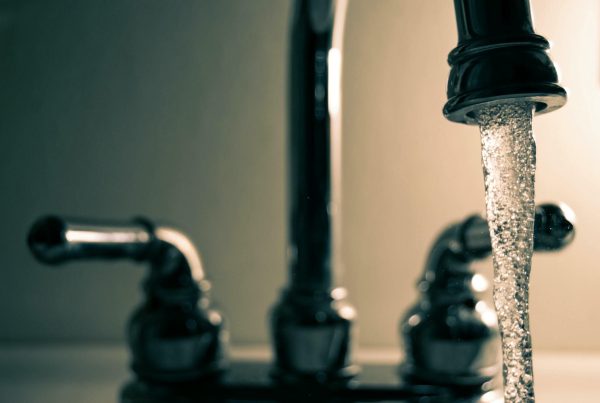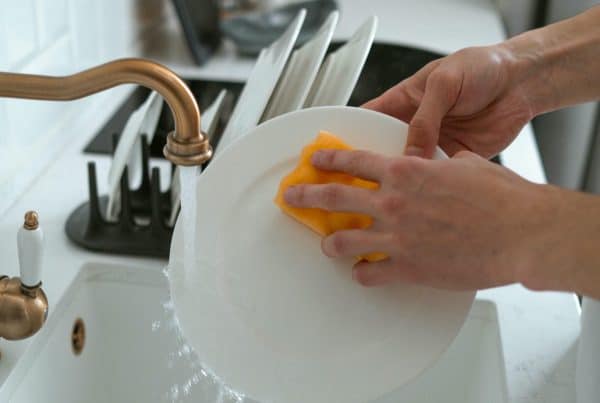



If you live in Las Vegas, you know the look: a cloudy white haze on the shower glass, crusty rings around the faucet base and a showerhead that sprays sideways. That is hard water scale, and our water is officially “very hard,” at roughly 16 to 17 grains per gallon according to the Las Vegas Valley Water District.
The good news is that most hard water stains come off with cheap household acids and a little patience. The bad news is that the same acids can ruin natural stone and some fixture finishes. Here is how to clean safely, and how to keep the stains from coming back.
What hard water stains really are
Las Vegas water carries a lot of dissolved calcium and magnesium from the Colorado River. When a drop of water dries on glass or chrome, the water evaporates and the minerals stay behind. Do that a few hundred times and you have a white crust. The American Cleaning Institute describes this film as mineral residue left behind as hard water evaporates, not leftover soap or detergent.
Calcium and magnesium deposits are alkaline, which is why mild acids dissolve them. Soap scum often mixes in, especially on shower glass, so the best approach handles both.
What you need
- Plain white household vinegar (not the concentrated “cleaning” or industrial vinegars)
- Citric acid powder or lemon juice
- A spray bottle, microfiber cloths and a non-scratch sponge
- An old toothbrush for faucet edges and aerators
- Zip-top bags and rubber bands for showerheads
- Rubber gloves and a squeegee
A safety note before you start: never mix vinegar or other acids with chlorine bleach. The Washington State Department of Health warns that bleach mixed with an acid gives off chlorine gas. Concentration also matters. Poison control specialists note that stronger acetic acid products are more hazardous than ordinary kitchen vinegar, and vinegar in the eyes should be rinsed right away.
How to remove hard water stains from shower glass
- Rinse and dry the glass so you can see the worst spots.
- Spray with undiluted white vinegar, or a warm solution of citric acid and water. Warm solutions tend to work faster.
- Let it sit for 10 to 15 minutes. For heavy buildup, lay vinegar-soaked paper towels against the glass so the acid keeps working.
- Scrub gently with a non-scratch sponge. Add a little dish soap to cut soap scum.
- Rinse thoroughly and squeegee dry. Repeat for stubborn areas.
Some shower glass has a factory protective coating. If yours does, check the manufacturer’s care instructions before using any acid or abrasive pad. Avoid steel wool and scouring powders on glass, which can leave fine scratches that collect even more scale.
Faucets, showerheads and fixtures
Faucets: Wrap a vinegar-soaked cloth around the base and spout for 15 to 30 minutes, then scrub the edges with a toothbrush and rinse. Unscrew the aerator and soak it in a cup of vinegar to clear clogged screens.
Showerheads: Fill a zip-top bag with vinegar, slip it over the head and secure it with a rubber band. Leave it for an hour or so, then remove, run hot water and brush the nozzles. Flexible rubber nozzles can often be rubbed clean with a finger.
Specialty finishes: Matte black, brushed gold, oil-rubbed bronze and other specialty finishes can be more sensitive than standard chrome. Test any acid on a hidden spot first, keep contact time short and follow the manufacturer’s cleaning guidance.
Toilets and tubs: For rings in a porcelain toilet bowl, lower the water level, apply vinegar or citric acid, let it sit, then scrub. Do not use this on a toilet you have just cleaned with a bleach product until it has been thoroughly flushed.
What not to use on natural stone
If your shower or vanity uses marble, travertine or limestone, be careful. These are calcareous stones made largely of calcium carbonate, the same alkaline material as hard water scale. That means vinegar and citric acid attack the stone as readily as the scale.
The Natural Stone Institute advises against products containing lemon, vinegar or other acids on calcareous stone because they can dull or etch the surface. It also discourages acidic cleaners on siliceous stones like granite. Their recommendations include:
- Clean with a neutral cleaner, stone soap or mild dish detergent and warm water.
- Avoid scouring powders and creams, which may scratch some stones.
- For hard water spots and rings, buff gently with dry 0000 steel wool.
- Squeegee stone shower walls after each use to reduce buildup.
Stone industry experts quoted by Use Natural Stone also recommend sealing stone in daily-use showers so water beads up rather than soaking in. If the surface is already etched or dull, a stone restoration professional is the safest fix.
How to prevent hard water stains
Cleaning removes the scale. Prevention keeps you from doing it every weekend. LVVWD’s own suggestions include wiping surfaces dry, using rinse aids and mineral-dissolving cleaners, and installing a household water softener.
- Squeegee after every shower. It takes 30 seconds and removes most of the water before it can dry into spots.
- Ventilate the bathroom so surfaces dry faster.
- Use a dishwasher rinse aid to reduce spotting on glassware.
- Treat the water itself. A water softener removes the calcium and magnesium that cause spots in the first place. Our Professional Series water softeners are designed for Las Vegas hardness levels.
If you would rather avoid salt, ScalePrep salt-free scale control uses no salt, no chemicals and no filter changes, and focuses on reducing scale buildup in pipes and appliances. Because it does not remove hardness minerals, you may still see some spotting where water dries on glass, so a squeegee still helps.
Curious how hard your own water is? See our guide on how to test for hard water, and read about what the same minerals do out of sight in our post on scale buildup in pipes.
Hard water stain FAQ
Is vinegar or citric acid better for hard water stains?
Both are mild acids that dissolve calcium deposits. Vinegar is easy to spray and soak. Citric acid has almost no smell and mixes easily in warm water. Use whichever you prefer, but never on marble, travertine or limestone.
Can I use vinegar on granite or quartz countertops?
The Natural Stone Institute discourages acidic cleaners even on granite. For engineered quartz, follow the manufacturer’s care guide. A neutral cleaner is the safe default for any stone counter.
Will a water softener stop hard water stains completely?
A properly sized and maintained softener removes the hardness minerals that cause most scale, so spots become much lighter and easier to wipe away. Soap residue and other dissolved solids can still leave some marks, so occasional wiping still helps.
Not sure what is in your water or which system makes sense? Call or text Water Quality of Las Vegas at 702-623-2724 to schedule a free water analysis. We are locally owned, offer same-day service and 100% financing, and we will explain exactly what we find before recommending anything.